
Sunscreen Matters: Choosing Safer, Non-Toxic Sun Protection for Your Family

As summer temperatures rise and we spend more time outdoors, sunscreen becomes an important part of protecting our skin from sun damage. But not all sunscreens are created equal. Many conventional products contain ingredients that raise concerns about hormone disruption, skin irritation, and long-term health effects.
At our office, we believe that what you put on your body is just as important as what you put in your body. Understanding sunscreen ingredients can help you make more informed choices for yourself and your family.
Your Skin: More Than Just a Protective Barrier
Did you know that your skin is the largest organ in your body?
Your skin serves as a protective barrier, helps regulate temperature, supports immune function, and interacts constantly with your environment. While the skin is incredibly effective at keeping many substances out, research has shown that certain chemicals applied to the skin can be absorbed into the bloodstream. This is one reason why ingredient awareness matters when choosing personal care products, including sunscreen.
Common Sunscreen Ingredients to Watch Out For
Many conventional sunscreens rely on chemical UV filters that absorb ultraviolet radiation. Several of these ingredients have come under increased scrutiny due to concerns about potential hormone disruption and environmental impacts.
Homosalate
Homosalate is commonly used to absorb UVB rays. Research has suggested it may exhibit endocrine-disrupting properties and can accumulate in the body over time.
Oxybenzone
Oxybenzone is one of the most controversial sunscreen ingredients. Studies have found that it can be absorbed through the skin and detected in blood and urine samples. Concerns have been raised regarding its potential effects on hormone function and reproductive health.
Octinoxate
Octinoxate is another chemical UV filter that has been associated with endocrine-disrupting activity in laboratory studies. It is also one of several sunscreen ingredients that has raised environmental concerns due to its impact on marine ecosystems.
Octocrylene
Octocrylene is often used to stabilize other sunscreen ingredients. Research has identified concerns about contamination with benzophenone, a compound that has been studied for potential carcinogenic effects.
While research is ongoing, many individuals choose to minimize exposure to these ingredients, especially for children and those seeking a lower-toxic lifestyle.
Additional Ingredients Worth Avoiding
When reading labels, it is also wise to watch for:
Parabens – preservatives that may mimic estrogen in the body.
Phthalates – commonly hidden within fragrance formulations and linked to hormone disruption.
Fragrance/Parfum – can contain dozens or even hundreds of undisclosed chemicals and may trigger sensitivities.
Paraffins and petroleum-derived ingredients – often used as inexpensive fillers in personal care products.
The challenge is that many of these ingredients may not be immediately obvious to consumers, making label reading an important habit.
Why I Prefer Mineral Sunscreens
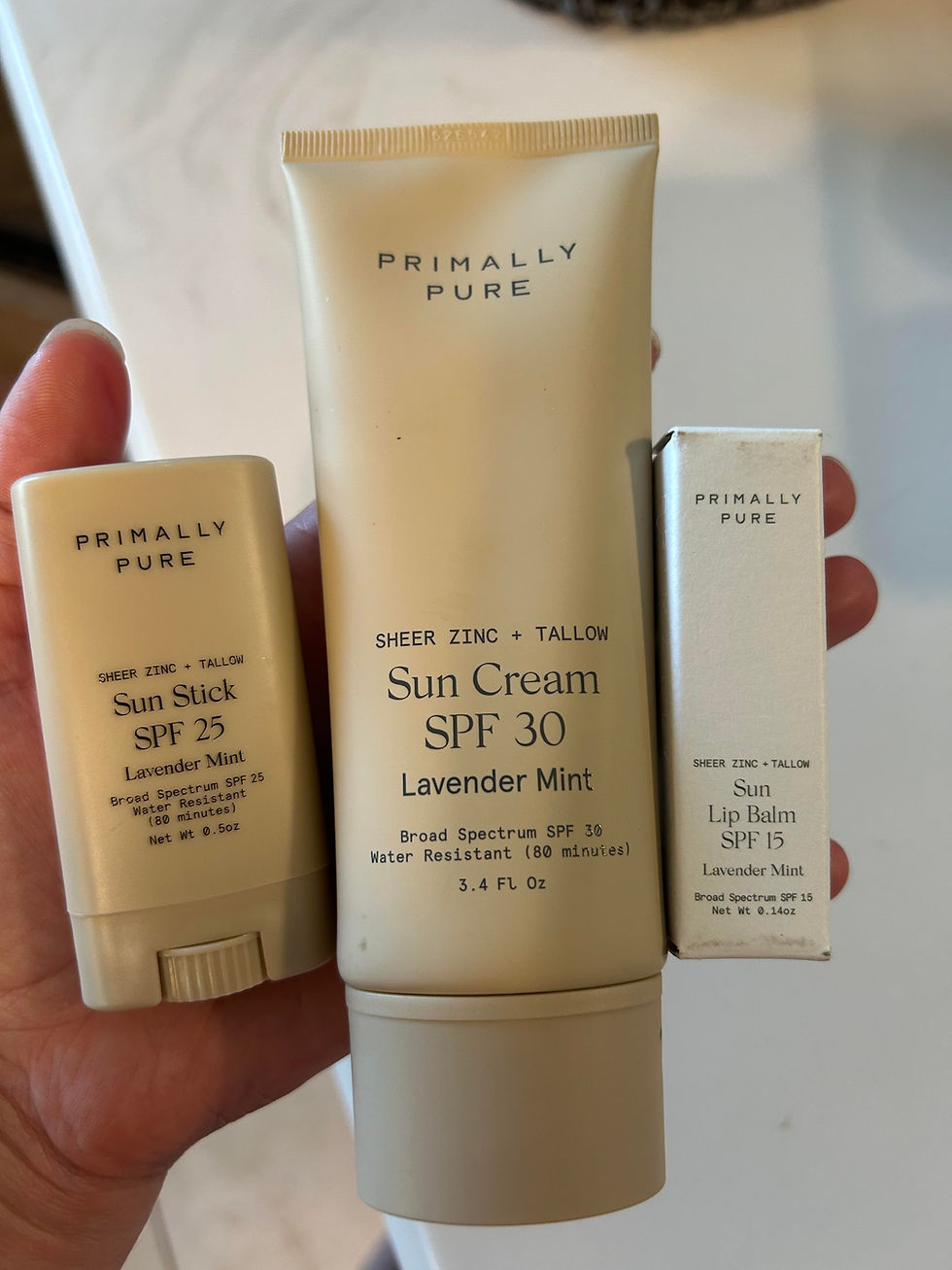
When it comes to sun protection, I personally prefer mineral-based sunscreens.
Mineral sunscreens use ingredients such as zinc oxide to help protect the skin from ultraviolet radiation. Zinc oxide is generally recognized as a safe and effective sunscreen ingredient and works by forming a protective barrier on the skin's surface.
One of the reasons many health-conscious consumers choose zinc oxide is that it remains primarily on the skin rather than being significantly absorbed into the bloodstream.
Benefits of Zinc Oxide Sunscreens
Broad-spectrum UVA and UVB protection
Gentle for sensitive skin
Less likely to cause irritation
Considered a safer option for children
Provides protection immediately upon application
Generally regarded as one of the safest sunscreen active ingredients available
Lotion vs. Spray Sunscreens
I also prefer lotion-based mineral sunscreens over spray sunscreens.
While spray sunscreens can be convenient, they often create application challenges:
Uneven coverage
Difficulty knowing how much product was actually applied
Increased risk of inhaling sunscreen particles
Greater likelihood of missing areas of skin
Lotion formulas allow for more thorough coverage and help ensure adequate protection.
How to Find Safer Products
One of my favorite resources when shopping for personal care products is the EWG Skin Deep Database.
This database evaluates ingredients found in thousands of personal care products and provides safety ratings based on available research.
When choosing sunscreen, I typically look for:
EWG Verified® products
Products scoring 1-2 on the EWG scale
Mineral-based formulas featuring zinc oxide as the active ingredient
Minimal ingredient lists
Fragrance-free options whenever possible
My Favorite Non-Toxic Sunscreen Brands
Here are a few brands I frequently recommend:
As formulations can change over time, I still encourage checking the ingredient list and EWG rating before purchasing.
Final Thoughts
Protecting your skin from excessive sun exposure is important, but so is understanding the ingredients in the products you use every day.
Choosing a mineral sunscreen with zinc oxide, avoiding potentially problematic chemical filters, and utilizing resources like the EWG Skin Deep Database can help you make more informed decisions for yourself and your family.
Remember, wellness isn't just about avoiding harm, it's about making intentional choices that support your health over the long term.
References
U.S. Food and Drug Administration. Sunscreen Drug Products for Over-the-Counter Human Use.
National Institute of Environmental Health Sciences. Endocrine Disruptors and Human Health.
Environmental Working Group. Skin Deep® Cosmetics Database.
Matta MK, et al. Effect of Sunscreen Application on Plasma Concentration of Sunscreen Active Ingredients. JAMA. 2020.
Schlumpf M, et al. Endocrine activity and developmental toxicity of cosmetic UV filters. International Journal of Andrology. 2008.
U.S. Food and Drug Administration. Studies on systemic absorption of sunscreen ingredients.
Environmental Working Group. Guide to Sunscreens.
American Academy of Dermatology. Sunscreen FAQs and Sun Protection Recommendations.


Comments